
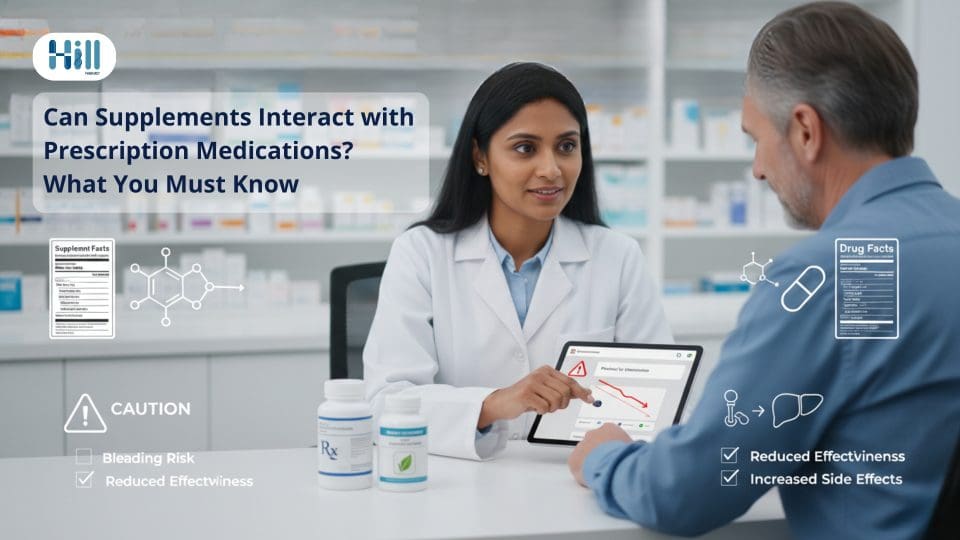
Dietary supplements are widely used for general wellness, immune support, heart health, and other health goals. Many people assume that because supplements are “natural,” they are always safe.
However, supplements can interact with prescription medications and may affect how those medications work in the body.
Understanding these potential interactions is essential for safe medication management.
What Are Dietary Supplements?
Dietary supplements include:
- Vitamins (Vitamin D, B12, etc.)
- Minerals (Calcium, Magnesium, Iron)
- Herbal products (St. John’s Wort, Ginkgo Biloba)
- Probiotics
- Omega-3 fatty acids
- Protein powders
- Botanical extracts
Unlike prescription medications, supplements are regulated as dietary products and may not undergo the same level of clinical testing.
How Do Supplement Interactions Occur?
Supplement–drug interactions can happen in several ways:
1. Affecting Absorption
Some supplements can reduce or increase how much medication is absorbed into the bloodstream.
Example:
- Calcium or iron supplements may reduce absorption of certain antibiotics or thyroid medications.
2. Changing Metabolism
Certain herbal supplements affect liver enzymes responsible for breaking down medications.
Example:
- Warfarin may interact with herbal products that affect clotting.
- Sertraline may interact with supplements that influence serotonin levels.
Changes in metabolism can make medications less effective or increase side effects.
3. Increasing Side Effects
Some supplements can amplify medication effects, increasing the risk of complications.
Example:
- Supplements with sedative properties may increase drowsiness when combined with sleep medications.
- Potassium supplements may raise potassium levels dangerously in patients taking certain blood pressure medications.
Common Supplement and Medication Interactions
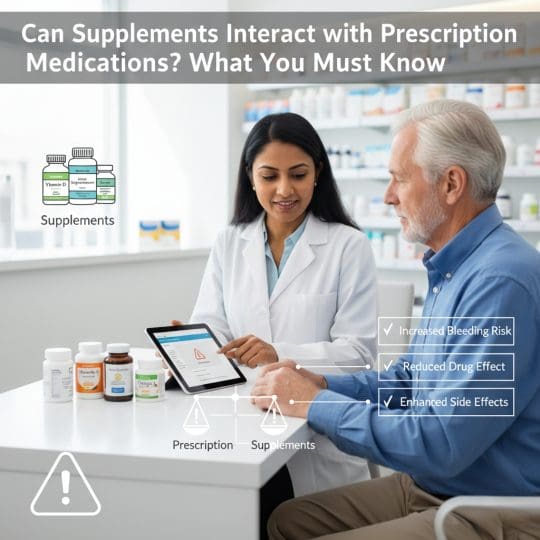
Below are examples of commonly reported interactions:
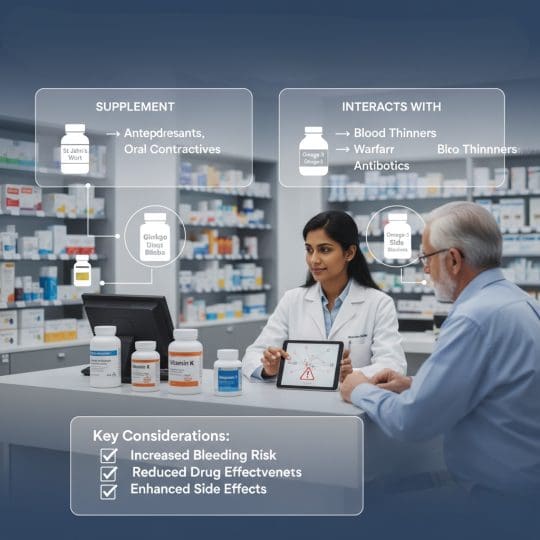
St. John’s Wort
Often used for mood support, it can reduce the effectiveness of:
- Birth control pills
- Antidepressants
- Blood thinners
- Transplant medications
Ginkgo Biloba
May increase bleeding risk when taken with blood thinners such as:
- Warfarin
Vitamin K
Can interfere with blood-thinning medications by reducing their effectiveness.
Also Read: How Pharmacists Can Help Manage Hypertension Effectively
Magnesium and Calcium
May interfere with:
- Certain antibiotics
- Thyroid medications
- Osteoporosis medications
Omega-3 Fatty Acids
High doses may increase bleeding risk in combination with anticoagulants.
Prescription Medications Most at Risk for Interactions
Certain medication categories are more likely to be affected by supplements:
- Blood thinners
- Blood pressure medications
- Antidepressants
- Diabetes medications
- Thyroid medications
- Immunosuppressants
- Chemotherapy drugs
Patients taking medications for chronic conditions should exercise particular caution.
Why Patients Often Do Not Report Supplements
Many patients do not inform their healthcare provider about supplement use because they:
- View supplements as harmless
- Forget to mention them
- Assume “natural” means safe
- Purchase them without a prescription
However, full transparency is essential for safe care.
How to Reduce Risk of Interactions
To minimize potential supplement–drug interactions:
1. Maintain an Updated Medication List
Include:
- Prescription medications
- Over-the-counter products
- All supplements
- Herbal products
Share this list at every medical appointment.
Also Read: The Latest Innovations in Telehealth Pharmacy Services
2. Consult Before Starting Any New Supplement
Speak with your pharmacist or healthcare provider before beginning any new supplement, especially if you take prescription medications.
3. Follow Proper Timing Instructions
Some supplements should be taken several hours apart from certain medications to prevent absorption interference.
Your pharmacist can provide guidance on timing.
4. Avoid High Doses Without Medical Advice
High-dose supplements increase the risk of interaction and side effects.
Are Supplements Ever Appropriate?
In many cases, supplements can safely complement prescription therapy when:
- Recommended by a healthcare provider
- Taken at appropriate doses
- Monitored appropriately
For example, Vitamin D supplementation may be appropriate for individuals with deficiency, but dosing should be guided by lab results.
The Role of Hill Pharmacy
Pharmacists play an important role in identifying potential supplement interactions.
Pharmacy support includes:
- Reviewing medication and supplement lists
- Identifying possible interactions
- Providing dosing guidance
- Recommending safe timing strategies
- Coordinating with prescribers if concerns arise
Pharmacists are trained to assess both prescription medications and non-prescription products to ensure safe use.
When to Seek Immediate Medical Attention
Contact a healthcare provider promptly if you experience:
- Unusual bleeding or bruising
- Severe dizziness
- Irregular heartbeat
- Unexpected side effects
- Changes in blood sugar levels
These symptoms may indicate a medication interaction.
Summary
Supplements can interact with prescription medications in ways that alter effectiveness or increase side effects.
Key points to remember:
- “Natural” does not always mean safe.
- Always disclose supplement use to your healthcare provider.
- Consult a pharmacist before starting new products.
- Monitor for unexpected symptoms.
Proper communication and medication review are essential for preventing harmful interactions.
Medical Disclaimer
This content is for informational purposes only and does not constitute medical advice. Always consult a licensed healthcare professional before starting, stopping, or combining supplements with prescription medications.